The Sacred Story of Shurpalaya
History & Legend
From Puranic origins to centuries of devotion, the story of Shri Lakshmi Narasimha Temple is woven through mythology, spiritual tradition, and the living faith of its people.
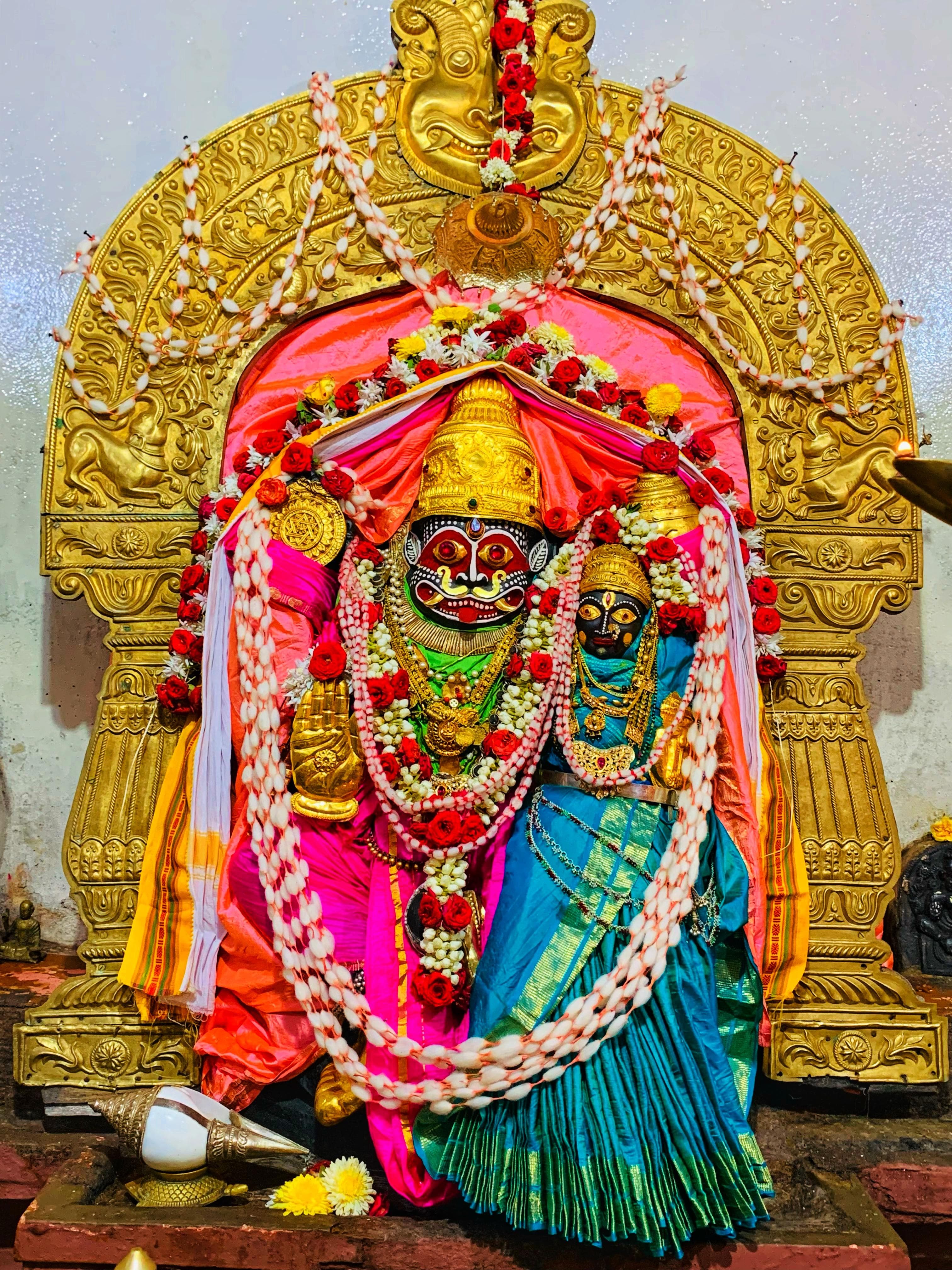
Shri Lakshmi Narasimha
Lord Narasimha is the fourth avatar of Lord Vishnu, manifesting as a half-man, half-lion form. He appeared to protect his devotee Prahlada and to vanquish the demon king Hiranyakashipu, who had received a boon making him nearly invincible.
In the form of Lakshmi Narasimha, the fierce deity is shown pacified by Goddess Lakshmi, who sits on His lap. This divine combination symbolises the perfect balance between strength and compassion, power and peace. After slaying Hiranyakashipu, Narasimha's fury was calmed by Lakshmi's gentle presence.
Devotees venerate Shri Lakshmi Narasimha for protection against negative energies, removal of obstacles and fears, and blessings of peace and prosperity. The deity represents the ultimate victory of Dharma (righteousness) over Adharma (evil) and embodies divine intervention during times of great need.
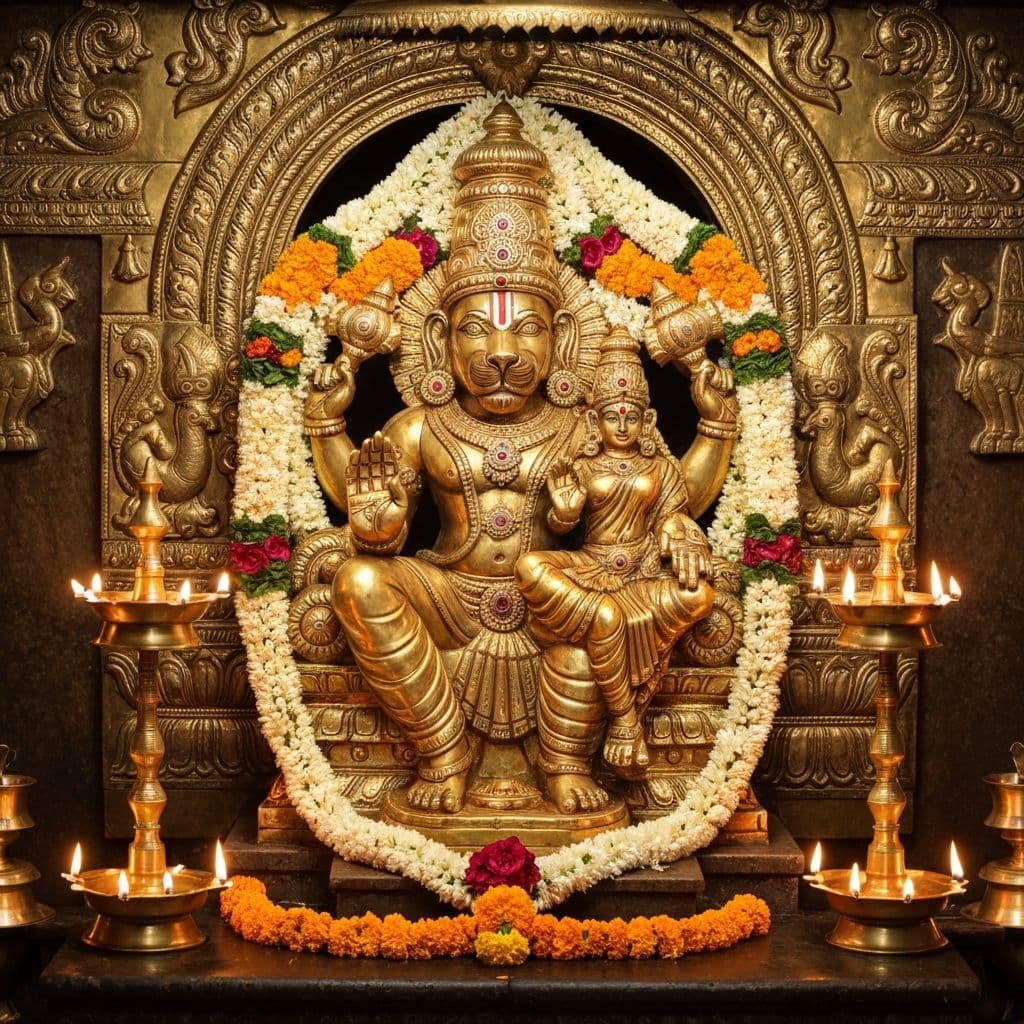
About Narasimha Avatar
Avatar Of
Lord Vishnu (Fourth Avatar)
Form
Half-man, half-lion (Nara + Simha)
Consort
Goddess Lakshmi (Goddess of Prosperity)
Significance
Protection, removal of obstacles, victory of Dharma over Adharma

Dakshina Kashi — The Southern Varanasi
Just as Varanasi (Kashi) on the banks of the Ganga is the holiest city for Hindus in the north, Shurpali on the banks of the Krishna has earned the revered title of Dakshina Kashi — the Kashi of the South.
This title reflects the extraordinary spiritual significance of the area. With its ancient Lakshmi Narasimha temple, multiple Shiva temples, eight sacred Teerthas (holy bathing pools) in the Krishna River, and the presence of Mruttika Brindavanas of Shri Tikakrutpadaru, Shri Raghuttama Tirtharu, and Shri Rayaru (Uttaradi Mutta, built by Venkanna Dasaru), Shurpali is a complete pilgrimage destination.
The region's connection to multiple Dvaita saints and its position as a stronghold of Madhwa Vaishnavite scholarship further cement its status as one of the most significant spiritual centres in Karnataka.
Timeline of Shurpali
Lord Parashurama & the Sacred Peepal Tree
According to the Skanda Purana, upon seeing the breathtaking beauty of Shurpalaya, Lord Parashurama shed tears of pure joy. Where those divine tears fell upon the earth, a sacred Peepal tree (Ashwattha Vruksha) sprang to life.
Mother Bhageerathi & the Origin
Mother Bhageerathi (river Ganga) is said to have come to this place to perform 'Shurpa Daana'. From this act of divine charity, the village received its name 'Shurpalaya'.
Tapobhumi of Shri Yadavaryaru
Shurpali became the sacred spiritual practice ground of Shri Yadavaryaru, one of the great Dvaita scholars. The village also holds connections to Shri Vidyadhisharu.
The 24 Inamdars
The Peshwas of Pune recognized the spiritual power of Shurpali and gifted land to 24 Inamdars, making it a stronghold of Madhwa Brahmins.